Allulose "Zero Sugar" Lawsuits: Why the FDA Reversal Matters
For six years the FDA let food makers leave allulose off the sugar line. In July it told a federal court allulose is a sugar after all, reopening one of the most common claims in the grocery store, “zero sugar,” to a fast-spreading wave of class actions.
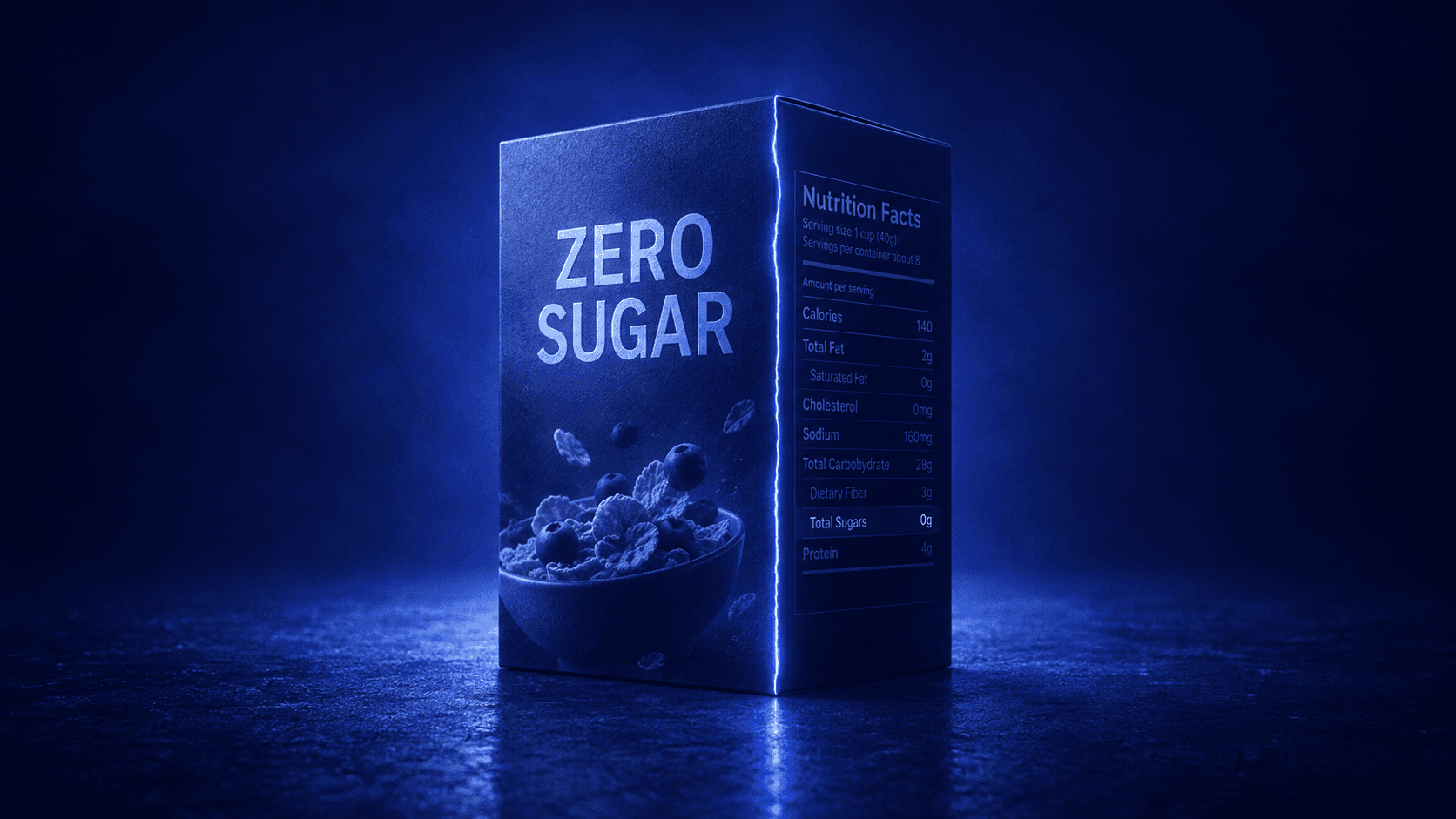
Walk any grocery aisle and count the packages that promise “Zero Sugar,” “0g Sugar,” or “No Added Sugar.”
It is one of the most common front-of-pack claims in the American food supply, and a growing share of those products deliver it the same way: with allulose, a sweetener that tastes like sugar but carries almost no calories and does not raise blood glucose.
For years that was a tidy solution. A brand could sweeten a yogurt or a sparkling water, print the words shoppers hunt for, and point to a Nutrition Facts panel that truthfully read zero grams of sugar.
In July 2026 a federal appeals court pulled the floor out from under that arrangement, and it did so with the FDA's help.
The result is a litigation wave with an unusually broad target and an unusually awkward origin story. The vulnerability the plaintiffs are exploiting was not created by the companies.
It was created by the FDA, which spent six years telling the industry it could treat allulose as not-sugar on the label, then told a court the opposite when it counted.
How the trap was built
Food labels carry two different kinds of sugar statement, governed by two different rules, and that distinction is the whole story. The Nutrition Facts panel on the back declares “Total Sugars” and “Added Sugars.”
Separately, a front-of-pack phrase like “sugar free” or “zero sugar” is a regulated nutrient-content claim, allowed only when a serving contains less than half a gram of sugar. Allulose sits differently under each.
In guidance proposed in 2019 and finalized in October 2020, the FDA said it would use enforcement discretion to let manufacturers exclude allulose from the Total and Added Sugars lines on the panel, and count it at just 0.4 calories per gram, pending a rulemaking to sort out sugars the body processes differently. The rulemaking never came.
And the agency never touched two things: the regulation defining “sugars,” which counts every monosaccharide, and the rules governing front-of-pack claims.
So the back panel could lawfully read zero while the front-of-pack “zero sugar” claim was still measured against a definition that treats allulose as sugar. For years nobody tested the gap, because the FDA's discretion made it feel safe. It was not a rule. It was a promise not to prosecute.
Six years, in five dates
Apr 2019 The FDA proposes guidance to let allulose be excluded from Total and Added Sugars on the Nutrition Facts panel.
Oct 2020 The agency finalizes that guidance unchanged, promising a rulemaking to settle the treatment of non-traditional sugars.
2020–2026 No rulemaking issues. Allulose use spreads across beverages, bars, dairy, and cereal on the strength of the guidance.
Jul 27, 2026 In Franco v. Chobani, the Seventh Circuit holds allulose is a sugar under the regulation, and that the FDA's non-enforcement does not shield brands from suit.
Aug 2026 Within weeks, copycat “zero sugar” class actions hit Liquid Death, WK Kellogg, KIND, David Protein, and others.
Why the courtesy became a weapon
The pivot is Franco v. Chobani, decided July 27, 2026. The plaintiffs said Chobani's Zero Sugar yogurt, sweetened with about four grams of allulose per serving, was deceptively labeled. Chobani argued the claims were preempted: federal food law bars states from imposing labeling rules different from the federal ones.
Writing for the panel, Judge Kirsch reversed the dismissal on a clean piece of logic. The Francos were not demanding a stricter standard; they were demanding the identical federal one, that a “sugar free” claim requires under half a gram of sugar and that allulose counts.
A state claim that merely tracks the federal requirement is not preempted, so it survives.
The line that reverberated through the food bar was about the guidance itself. Enforcement discretion, the court reasoned, is a decision not to prosecute, not a declaration that the label is lawful, and it is no safe harbor from private suits.
The FDA drove the point home by filing an amicus brief telling the court allulose is a sugar under its own regulation, the precise opposite of the leeway it still extends on the panel.
Defense-side commentators promptly called it a bait-and-switch, and they have a point: the agency invited an industry practice and then supplied the argument to punish it. Franco resolved only preemption. Chobani's other defenses go back to the district court on remand.
The wave, and why the target is so wide
Because the theory attaches to a claim rather than a company, it travels almost frictionlessly. Within weeks of Franco, near-identical class actions were filed across federal courts in California and New York:
Liquid Death (Williamson v. Supplying Demand, Inc., Northern District of California), over “0g Sugar” sparkling energy drinks.
WK Kellogg (Bender-Long v. WK Kellogg Co., Central District of California), over “Zero Added Sugar” Special K cereal.
KIND (Coprew v. KIND LLC, Southern District of New York), over “ZEROg Added Sugar” bars.
David Protein (Northern District of California), whose late-August complaint expressly cites Chobani, along with Liquid IV and a growing list of others.
Two versions of the claim are in play and both fail for the same reason. A “zero sugar” claim fails because allulose is a sugar; a “zero added sugar” claim fails because it is a sugar deliberately added to the recipe.
The exposure concentrates wherever allulose does the sweetening and the front of the package says so, which today means better-for-you beverages, protein and snack bars, yogurts and dairy, low-sugar cereals, and functional candy.
The allulose market is projected to roughly double by the mid-2030s, pushed by sugar-reduction and the GLP-1 era, so the pool of candidate products is expanding even as the suits pile up.
Why these cases are worth filing
Front-of-pack labeling suits are a mature plaintiffs' practice, not a novelty.
The same playbook has been run for years against “all natural,” “healthy,” and “no preservatives,” and it runs on state consumer-protection statutes that make small per-unit harms worth aggregating: California's Consumer Legal Remedies Act and Unfair Competition Law, New York's General Business Law, and their cousins, which offer statutory damages or restitution, injunctions, and, importantly, attorney's fees.
A shopper who paid a few cents more for a “zero sugar” bar has a trivial individual claim and, multiplied across a nationwide class with fee-shifting attached, a serious one.
Franco simply handed that established machinery a fresh, easily replicated theory with an appellate seal and, unusually, the endorsing voice of the regulator.
What could still stop it
The wave is real, but it is not a foregone conclusion, and the defenses are substantial:
The reasonable consumer. This is the fight that will decide most of these cases: does a shopper read "zero sugar" as a claim about grams of monosaccharide, or as a promise about calories and blood sugar, which is what allulose actually delivers? Doctrine turns on that framing, a back panel can't rescue an unambiguously deceptive front (Williams v. Gerber) but can defeat a merely ambiguous one (McGinity v. P&G). Whoever wins that characterization usually wins at the pleadings.
Primary jurisdiction. Defendants can ask courts to defer to the FDA as the body that should resolve allulose's status, though the agency's six years of silence cut against pausing for it.
The rulemaking wildcard. The FDA could finally formalize an allulose carve-out and largely end the theory. The prevailing sugar-reduction politics favor sugar substitutes, so a rule is plausible, but it would not erase claims already filed.
No circuit split, yet. Franco is the first appellate word, which is why it is driving copycats. Another circuit could read the enforcement-discretion question the other way and hand defendants a counterweight.
Strip the case law away and the situation is almost absurd: a product can print a number the FDA permits on one side of the box and be sued for the word describing that same number on the other.
That gap did not open by accident. It opened because a regulator chose leniency, declined to finish the job, and then argued the leniency meant nothing when a court asked.
Until the FDA writes the rule it promised in 2020, or judges decide that “zero sugar” speaks to glycemic impact rather than grams, the safest assumption for anyone selling an allulose-sweetened product is that the front of the package is now a liability the back of the package cannot cure.
Track the “zero sugar” wave before it reaches the next label.
Every filed allulose and “zero sugar” case, the brands and products named, the jurisdictions and claims in play, and the rulings and any FDA action shaping the theory, tracked in one place and updated as the docket moves.
Originating or defending in this space? Rain maps emerging theories to the companies, products, and forums most exposed before the next complaint is filed. Book a 30-minute walkthrough.