Right of Publicity: The New Front in AI Training Lawsuits
Twitch creators, deepfake victims, and Nest bystanders are suing AI companies under right-of-publicity law. Inside the theory, the cases, and the NO FAKES Act.
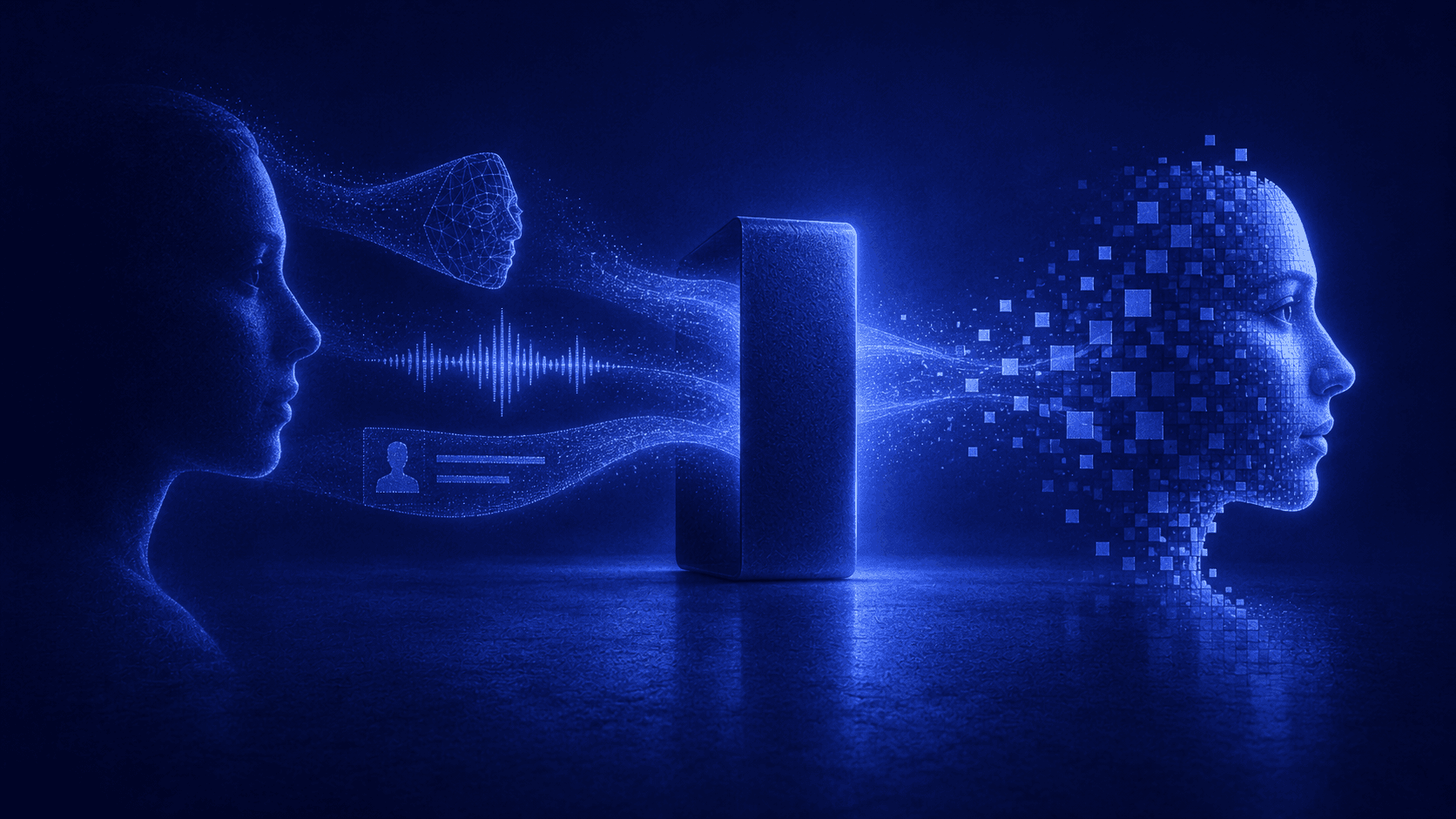
In the spring of 2024, OpenAI unveiled a ChatGPT voice named “Sky” that a great many listeners immediately heard as Scarlett Johansson, who had declined the company's request to license her voice. OpenAI pulled the voice under legal threat, and then something revealing happened: nothing.
No lawsuit resolved the question, because the law had no clean answer. Johansson had not been recorded or copied in any traditional sense. What had allegedly been taken was something copyright does not protect and no federal statute clearly reaches, the recognizable identity of a specific human being.
The episode exposed the gap, and the plaintiffs' bar has spent the time since filling it.
The tool they reached for is the right of publicity, the largely state-law right to control the commercial use of one's name, image, likeness, and voice. It is not new; it grew out of privacy law decades ago and is best known from celebrity endorsement disputes.
What is new is where it is being pointed.
In a run of 2026 filings, right-of-publicity claims are being attached to AI from several directions at once, against companies that allegedly used people's identities to train their models, against companies whose models generate the likenesses of real people, and against companies whose AI captures the faces of passersby.
Copyright asks whether a work was copied. Publicity asks a different and, for AI, often sharper question: was a person used?
Why the theory reaches what copyright cannot
Two federal rulings explain why publicity has become the go-to theory. In Lehrman v. Lovo (Southern District of New York, 2025), two voice actors sued an AI voice-cloning company.
The court dismissed most of the federal copyright and trademark claims but let the right-of-publicity claims proceed, reasoning that copyright protects a fixed recording, not the imitation or simulation of a voice.
In Young v. NeoCortext, a class action over an AI face-swapping app, a California federal court held that a publicity claim under Civil Code section 3344 is not preempted by the Copyright Act, and the Ninth Circuit let the case proceed.
The through-line is simple and it is the reason this wave exists. Copyright protects the work; the right of publicity protects the person. A model can imitate a voice it never copied, or generate a face from a description, and slip between the seams of copyright entirely. Publicity law sits in that seam.
That is what makes it the natural second front once the copyright cases run into their limits.
Front one: the identities fed in
The clearest new example arrived by way of a product decision. On August 12, 2026, Amazon's Twitch switched on a setting, by default, that enrolls creators' content into Amazon's generative-AI training, streams, clips, chat logs, and channel images, with only an opt-out.
Twitch's own product chief explained the design in a single sentence: “If it was opt in, nobody would opt in.” For a right-of-publicity claim, that is close to an admission on the element that matters most, consent.
Two class actions followed within two weeks, both in the Northern District of California. Gamlen v. Amazon.com alleges that Amazon “appropriated Twitch streamers' identities and used them as raw material” for its commercial AI, pleading California Civil Code section 3344, common-law right of publicity, and unfair competition.
Gordley v. Twitch runs a parallel theory and ties the conduct to a named product: Amazon's Nova foundation models, offered commercially through Amazon Bedrock.
Its framing is the crux of the training-data version of the theory, that a person's face, voice, and name are not incidental to the content but are themselves “an expensive category of machine-learning training input,” one for which, the complaint says, an open market already pays “by the image, by the minute.”
The toggle drew more than one kind of claim. A companion class action filed the same week, Pandiscia v. Twitch, presses breach-of-contract and unfair-competition theories rather than right of publicity, a reminder that identity is one of several theories plaintiffs are testing against the same conduct, and that the bar has not yet settled on which one carries the most weight.
This is the same seam the voice cases occupy. The professional voice actors in Lovo, and the broadcasters and narrators behind the larger 2026 wave of voice-training suits, are all making a version of one argument: their identities were the product's fuel, and no one asked.
The right of publicity is what converts that grievance into a cause of action with statutory damages behind it.
Front two: the likenesses that come out
The other front is the model's output, and here the cases are graver. The starkest is Doe v. X.AI, filed in the Northern District of California, which concerns Grok, the generative-AI system integrated into X.
The complaint alleges that Grok was used to generate non-consensual sexualized “deepfake” images of real women from ordinary photos, and that it disseminated them publicly through the platform.
It sits within a broad product-liability and tort complaint, but two of its counts are the identity claims that tie it to the rest of this wave: common-law appropriation and California's statutory right of publicity under Civil Code section 3344, the same statute the training-input cases invoke.
The theory is that the defendants used the plaintiffs' likenesses without consent and, in the complaint's telling, to drive paid subscriptions.
The legal significance sits alongside the human harm. Output cases raise a defense that training-input cases largely avoid: platform immunity under Section 230. But right-of-publicity claims may fall within Section 230's exception for “any law pertaining to intellectual property.”
The Third Circuit held exactly that in Hepp v. Facebook, finding a state publicity claim outside Section 230's shield, while the Ninth Circuit has read the same exception more narrowly.
That unresolved split is now directly in the path of the AI-output cases, and there is separate legislation that would strip Section 230 from generative-AI providers altogether.
It sits within a broad product-liability and tort complaint, but two of its counts are the identity claims that tie it to the rest of this wave: common-law appropriation and California's statutory right of publicity under Civil Code section 3344, the same statute the training-input cases invoke.
The theory is that the defendants used the plaintiffs' likenesses without consent and, in the complaint's telling, to drive paid subscriptions.
And a third: the faces captured off the street
The training-input and output cases both involve content that a person made or that a model conjured. A third use of the same statute reaches people who created nothing and agreed to nothing.
Two class actions filed days apart in the Northern District of California, Fennessy v. Google (June 29, 2026) and Trevino v. Google (July 1, the latter from the same firm behind the Twitch suit), allege that Google's Nest cameras and doorbells run an AI "Familiar Face Detection" feature that scans every passerby in a device's field of view, captures an image, builds a mathematical template of their facial geometry, and files it in a library, without the bystander's knowledge or consent.
The named plaintiffs never owned a Nest device or agreed to any Google terms; they were simply walking past. The suits plead Civil Code section 3344 alongside privacy torts, intrusion upon seclusion, unfair competition, and, in Trevino, the California constitutional right to privacy.
One allegation makes the cases a clean window on the whole theory. Google, the complaints say, disables the feature on devices in Illinois to avoid that state's Biometric Information Privacy Act, while leaving it running everywhere else.
Illinois is the one state whose biometric law lets individuals sue directly. In the other forty-nine, right of publicity is the tool within reach, and section 3344's protection of a person's "likeness" is being asked to do the work a dedicated biometric statute would do if one existed.
That is the pattern beneath this entire wave: where a purpose-built law is missing, publicity law is stretched to fill the gap, now against AI that captures identity as readily as it generates it.
The engine underneath: an ordinary statute
It helps to see the doctrine stripped of the AI framing, which is what a fourth 2026 case offers. Guidotti v. EquiMine, against the real-estate data platform PropStream, has nothing to do with artificial intelligence.
It alleges that the company displayed real people's names inside its seven-day free trial to advertise and sell subscriptions, using those names as “free leads” to demonstrate the product's value, all under the same Civil Code section 3344 and common-law right of publicity.
Seen next to the AI suits, it makes the pattern legible: the underlying tool is a decades-old commercial-use statute, and the AI cases are that statute aimed at a new kind of defendant.
The engine is not novel, but the targets are.
The law is being rebuilt around the theory
The litigation is running in front of a legislative wave built for exactly these facts. Tennessee's ELVIS Act, effective in 2024, was the first state law written for AI voice and likeness cloning, and it reaches not just users but the makers of tools whose purpose is to replicate an identifiable person.
At the federal level, the NO FAKES Act cleared the Senate Judiciary Committee unanimously in June 2026 and would create the first federal right of publicity aimed at unauthorized AI replicas of voice and likeness, with carve-outs for news, commentary, parody, and other protected speech.
As of early September 2026 it still awaits a vote by the full Senate. Supporters call it overdue; critics warn it could sweep in protected expression.
Either way, its progress tells defendants and plaintiffs the same thing: the identity-in-AI question is not going to stay a matter of improvised state-law analogies for long.
What still stands in the way
None of this is a settled win for plaintiffs, and the defenses are substantial:
The First Amendment. Right of publicity has always been in tension with free expression, and courts test it with a “transformative use” analysis. Defendants will argue that a model trained on billions of inputs, or an output that recombines them, is transformative; plaintiffs will argue that ingesting a specific person's identity to build a commercial product transforms nothing about that person.
Section 230, on the output side. For deepfake and generated-likeness claims, platforms will invoke immunity, and whether the intellectual-property exception rescues a publicity claim depends on a live circuit split.
The patchwork. The right of publicity is a state-by-state map, robust in California, New York, and Tennessee, absent elsewhere, which turns choice of law into a threshold battleground and is the strongest argument for a single federal standard.
The commercial-use line. Statutes like section 3344 require a use “on or in products, merchandise, or goods, or for purposes of advertising.” Defendants will contest whether training a model, or generating an image, fits that language at all.
What ties the the training-input cases, the deepfake cases, the camera cases, and the legislative push together is a single reframing. For two years the AI-and-content debate was argued almost entirely in the language of copyright, a fight about works and datasets.
The right of publicity moves the question from the work to the human being behind it, and in doing so it reaches conduct copyright was never built to address.
Whether courts stretch a patchwork of state statutes to meet the moment, or Congress writes a federal right first, the center of gravity in identity-and-AI litigation has already shifted. The cases now being filed are not really about what the machines made.
They are about whose name, face, and voice went into making them.
Track the right-of-publicity front in AI litigation.
Rain maps emerging theories to the companies, industries, and forums most exposed before the next complaint is filed. Book a 30-minute walkthrough.