Up the Supply Chain: Motorola's License-Plate Class Action and the Turn Toward ALPR Operators
Two California drivers sued Motorola over its license-plate network. Inside Rojas v. Motorola, the SB 34 operator theory, and why ALPR vendors are next.
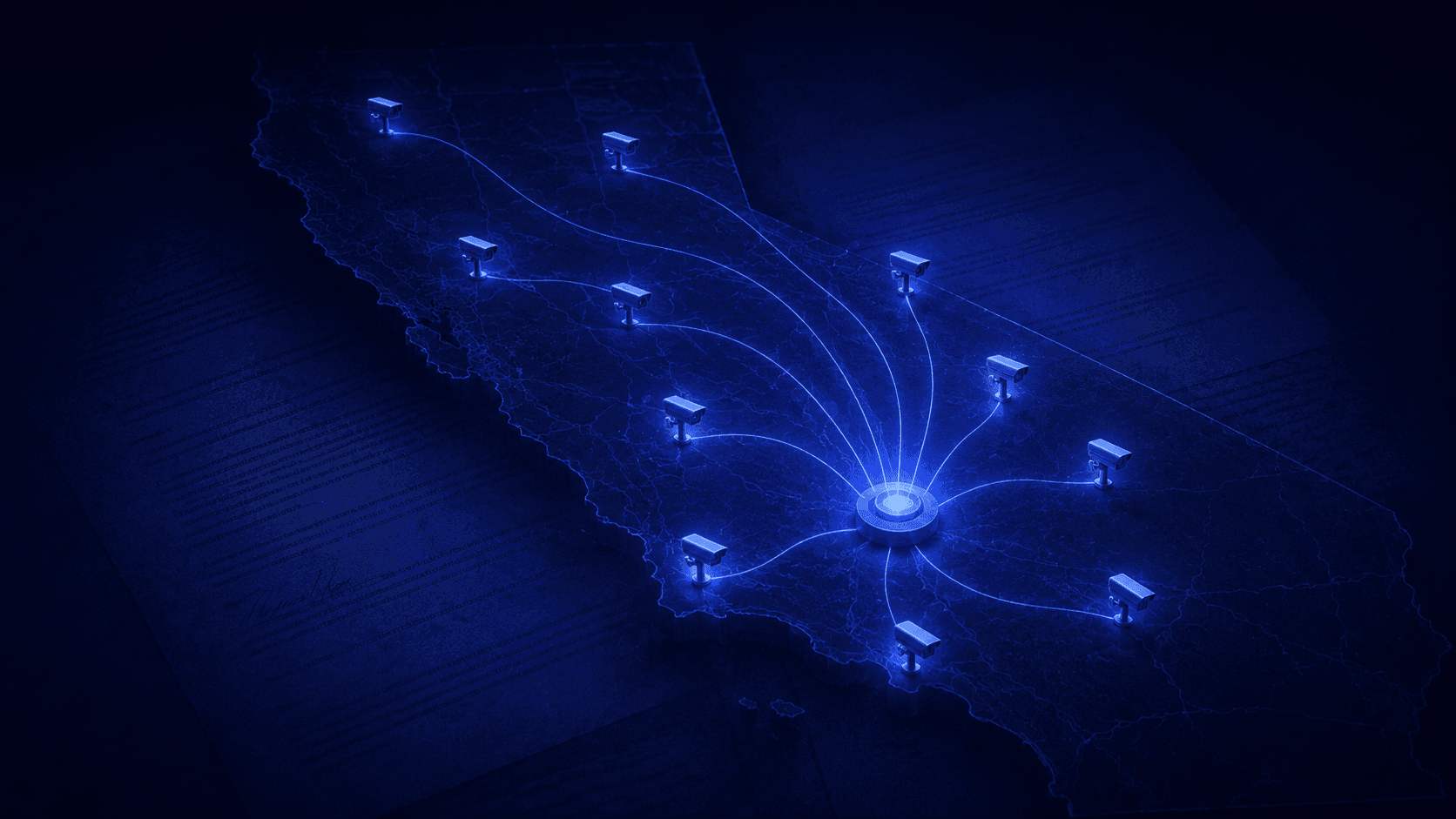
For four months, California's license-plate privacy litigation had a consistent shape. Plaintiffs sued the businesses that installed cameras: shopping malls, retailers, medical centers, and commercial campuses that deployed automated license plate reader (ALPR) systems without the privacy policy state law requires.
Rain Intelligence has tracked that wave closely, from the Bartholomew ruling that lit the fuse to the class actions against Flock Safety's customers. A complaint filed on May 27, 2026 points the theory somewhere new.
In Rojas v. Motorola Solutions, Inc., No. 2026CH05072, two Merced, California residents, Michelle Rojas and Marissa Barriga, sued Motorola Solutions in the Circuit Court of Cook County, Illinois, Chancery Division.
They allege that Motorola operates a network of ALPR cameras in California that captured their plates without the security measures and public usage policy the state mandates, and without preventing that data from reaching federal and out-of-state agencies.
The plaintiffs are represented by Scott R. Drury of Drury Legal, whose founder led the multidistrict litigation against Clearview AI, with co-counsel Joshua Arisohn of Arisohn LLC. Motorola has not yet responded, and the allegations are unproven.
The significance is not another defendant on a growing list. It is the kind of defendant. This is the litigation moving up the supply chain, from the businesses that point the cameras to the company that builds and operates the network behind them.
A different defendant: the operator, not the camera user
The Flock-customer cases share a structural feature: the defendants are businesses whose core purpose has nothing to do with license plates. A mall installs cameras for security; collecting plate data is incidental to running a shopping center. Motorola is the opposite.
Through its 2019 acquisition of VaaS International Holdings for $445 million, Motorola owns two of the most significant names in the field: Vigilant Solutions, which serves law enforcement, and Digital Recognition Network, which serves commercial customers.
Together they run one of the largest ALPR camera and data operations in the country. Operating plate-reading networks is not incidental to Motorola's business; in this corner of it, the network is the business.
That distinction matters legally. California's ALPR statute imposes its core duties on an ALPR operator, defined as an entity that operates an ALPR system, and on the end users who access the data. A mall can argue about whether it qualifies as an operator at all.
A company whose product is a plate-reading network does not have that argument available, and the Rojas complaint presses exactly that point, pleading that Motorola is both an operator and an end user.
When the statute's obligations, reasonable security procedures and a public usage and privacy policy under Civil Code Section 1798.90.51, are applied to a dedicated operator, they land on the most natural target the law contemplates.
What the complaint actually alleges
The complaint raises a single count, for violation of California Civil Code Section 1798.90.5 et seq., and grounds it in concrete facts rather than abstractions. The named plaintiffs live in Merced and drove past Motorola's ALPR cameras near the University of California, Merced entrance, one of them on a near-daily basis.
The complaint alleges three failures: Motorola did not maintain reasonable security procedures for the captured data, did not conspicuously post a compliant usage and privacy policy on its website, and gave no written notice of any such policy at the cameras themselves.
The pleaded harm goes beyond the missing paperwork. The plaintiffs allege that, because the data was not adequately secured, their plate and location records were accessed by and shared with federal and out-of-state agencies, and that they now experience emotional distress and fear that the federal government is using their movement data improperly, an allegation the complaint ties to reports of federal arrests of U.S. citizens.
That framing situates the case squarely within the 2025 controversy over plate data reaching immigration and other federal enforcement.
The proposed class covers everyone in the United States whose plate was captured by Motorola's California ALPR cameras during the class period, which the complaint estimates numbers in the thousands, with each member entitled to at least $2,500 plus punitive damages, fees, and an injunction.
Why the timing follows Bartholomew, without repeating it
Readers of our earlier coverage know the doctrinal engine: in February 2026, a California appellate court held that failing to implement and publish a compliant ALPR policy is itself a cognizable harm, with no need to prove breach or misuse. We will not re-tread that ground here.
The point worth adding is what the ruling means once the defendant is a network operator rather than a camera user. The defense that fared worst in Bartholomew, that nobody was really harmed, is even harder to run for a company whose ALPR network the complaint says fed data to federal agencies.
And as defense-side analysts have noted, the appellate court left open whether a single violation is counted per scan, per car, or per person, an unsettled question that grows more consequential the larger the operator's footprint.
Not the first shot at this target
Motorola's plate-data business was already in litigation before the current wave began. In Mata v. Digital Recognition Network, filed in San Diego County Superior Court in 2021 and certified as a class action in 2023, the plaintiffs allege the same category of statutory violations on behalf of every California resident whose plate Motorola's commercial subsidiary scanned at least fifteen times since June 2017, an estimated 23 million people.
At the statute's $2,500 floor, that class implies a theoretical exposure in the tens of billions of dollars. Mata predates Bartholomew and has been the slower-moving test of operator liability. Rojas arrives with Bartholomew already on the books and aims at the corporate parent rather than the subsidiary, so the operator theory is now being litigated against the same business in two states at once.
Suing the parent, in its own backyard
The forum is itself a signal. Rather than name the operating subsidiary in California, the plaintiffs named Motorola Solutions, the Chicago-based parent, in Cook County, where the case drew the Chancery Division and Judge Neil Cohen.
That puts the deepest pocket in the corporate structure directly on the caption and litigates in the parent's home court, where personal jurisdiction is uncomplicated. It reflects a plaintiff-side judgment that Motorola, a public company with a market capitalization in the tens of billions, is a more durable defendant than a subsidiary whose assets and insurance may be limited.
Motorola is not new to privacy exposure either; it paid a $47.5 million settlement over claims that its FaceSearch facial-recognition tool violated Illinois biometric law, a reminder that its data-analytics portfolio carries litigation risk well beyond plate readers.
Why it matters
If the operator theory holds, the implications run past Motorola. The ALPR market has a small number of companies that actually build and run the underlying networks, and each of them is, by definition, an operator under the statute.
A wave that began against the diffuse universe of businesses that bought cameras could consolidate against the concentrated handful of firms that supply them.
That is a more efficient target for the plaintiffs' bar and a more existential risk for the vendors, because an operator cannot escape the statute by switching off a single camera when running the network is the product.
For the defense, the case will turn less on whether Motorola is an operator, which is hard to dispute, than on the questions Bartholomew left open: what counts as a single violation, whether Motorola's existing policies and security measures satisfy the statute, and whether the proof of federal sharing the complaint promises will materialize in discovery.
None of that is resolved, and the complaint is days old. But the direction of travel is now clear. Having spent four months suing the businesses that hold the cameras, the plaintiffs' bar has started climbing toward the companies that run the networks, and Motorola is the first stop.
Track the wave as it moves up the supply chain.
ALPR litigation went from a single appellate ruling to a multi-front movement in four months, and it is now reaching the operators themselves.
We predicted the Motorola suit on April 1, 2026, eight weeks before it was filed. Rain Intelligence does the same across every sector, so you see the next complaint before it lands. Book a demo to see where your exposure sits.